Quick Facts:
- Name: Republic of Turkey
- Location: NE "corner" of the Mediterranean Sea; bridge between Europe and the Middle East
- Independence Day: October 29, 1923
- Father of Turkey: Ataturk (Mustafa Kemal)
- Capital City: Ankara
- Other large cities: Istanbul and Izmir
- Other cities and geography of note: Ephesus, Tarsus, Mount Ararat, Tigris and Euphrates
- Republican parliamentary democracy
- 1,000 miles long, 350 miles wide
- Seven Regions: Marmara, Aegean, Black Sea, Central Anatolia, Mediterranean, East Antolia, Southeastern Anatolia
- Population: approximately 70 million
- 3,000 Turkish believers
- Due to intermarriage during the Ottoman Empire, modern Turks are a mixture of ethnic nationalities; some have black hair and dark complexions while other have light hair with fair complexions
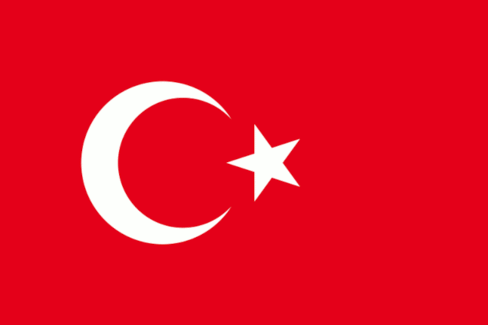
- People are extremely nationalistic; important sayings include "To be a Turk is to be a Muslim" and "Our language, our religion, and our flag are one"
- Land of extensive biblical heritage, famous trade routes, and the center of many ancient empires
- Summary: Beautiful, history-laden land with hardworking, friendly, and hospitable people

Detailed Historical Summary:
*Note: All information is adapted from Turkey: The Lost Land of the Bible by Dr. Andrew Jackson.
Turkey straddles the strait that divides Europe and the Middle East at the northeast “corner” of the Mediterranean Sea. In this strategic location, famous trade routes, biblical history, and a long series of ancient civilizations (Hatti, Hittites, Phrygians, Persians, Greeks, Romans, Seljuks, Ottomans, and Byzantines) add to the colorful history of this land.
During the Middle Ages, Turkish nomadic tribes roamed northern Mongolia and Central Asia living in tents, worshipping nature, and establishing a reputation as a militant people group. When the Turks came into contact with Arab Muslims, the character and religious identity of the people began to change as they integrated Islam into shamanistic religious practices.
The Turks gained power as they began to occupy military and political offices in the Arab Kingdom in Persia (today’s Iran), and as the Arabs' power declined, the strong Turkish clan called the Seljuks migrated out of Central Asia and conquered Persia. From there, Turkish warrior groups invaded eastern Anatolia (the Central Asian part of Turkey) in opposition to the Byzantium Empire. With an important victory in AD 1071, the Seljuks continued to expand. When they expanded into Jerusalem, the Roman Catholic Church launched four zealous attempts to stop the Turks; these attacks are known as the Crusades.
Despite these attacks, the Seljuks and the Christian Byzantine Empire occupied the land of Anatolia tranquilly. However, when the Mongols took over Iran, waves of Turks entered the land. The people were divided into ten independent Turkish principalities which all sought to grow in numbers and power. In the thirteenth century AD, one small northern principality emerged as a presence that would eventually grow into the Ottoman Empire.
The Ottoman Empire experienced rapid expansion spreading the Muslim state as it captured Constantinople in AD 1453 and continued to stretch its borders through the height of the empire under Sultan Sulyman (AD 1520-1566). After Sulyman’s death, the Ottoman Empire experienced a long period of decline and was eventually overshadowed by the more progressive Europe in the early 1800s.
During WWI, the Ottomans sided with the Germans, and with The Treaty of Sevres, the empire was officially at its end and the Allies planned to divide the land among themselves. However when the Greeks invaded the Aegean Region of Anatolia, Mustafa Kemal (the leader of a secret reform group) formed a resistance movement and led the people to victory. The Allies retreated from their claims of the land and authorized the establishment of the modern Republic of Turkey.
Mustafa Kemal was named the first president of the newly-formed Turkish Republic on October 29, 1923, and as a result of the immense changes he instituted in the Republic, the people named him Ataturk - the "Father of the Turks" - to show their high esteem. Ataturk abolished the sultanate, replaced Islamic laws with laws based on European codes, liberated women, and adopted a modified Latin alphabet over the old Arabic alphabet.
Since Ataturk's death in 1938, Turkey has faced significant challenges in the areas of urbanization as many people migrate from the eastern rural areas to the mega-cities in the west; Kurdish conflict as a deep animosity exists between Kurds and Turks; and radical Islam as fundamentalists spur a revival and a return to true Islam. After the fifteen year Turkish Civil War from 1984-1998, the country has remained relatively peaceful. If the government or another group interfere with this peaceful state in Turkey, the army is prepared to step in as they are the defenders of Ataturk's ideals.

No comments:
Post a Comment